How to Take Wedding Photos with the Northern Lights
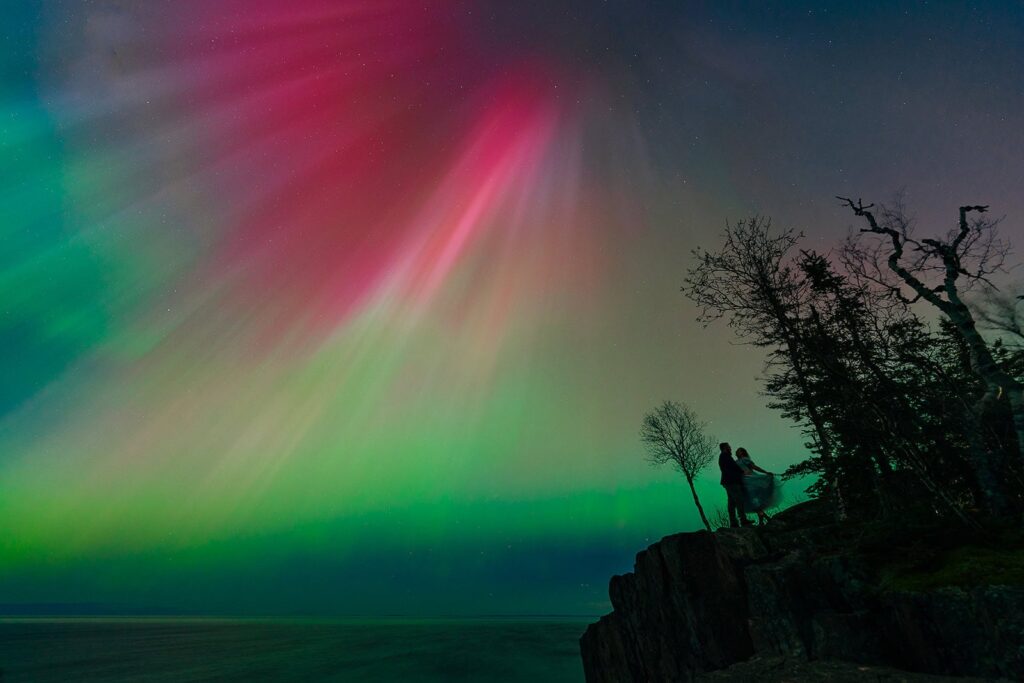
Minnesota is in a Solar Maximum window right now. This peak happens around 2025, meaning your chances of seeing the Aurora Borealis are higher than they’ve been in a decade. Even better? Minnesota is one of the few places in the lower 48 states with International Dark Sky Parks. This makes it a world-class destination for bucket-list Northern Lights wedding pictures. If you’ve been dreaming of those magical green skies dancing above your wedding day, this is your moment!
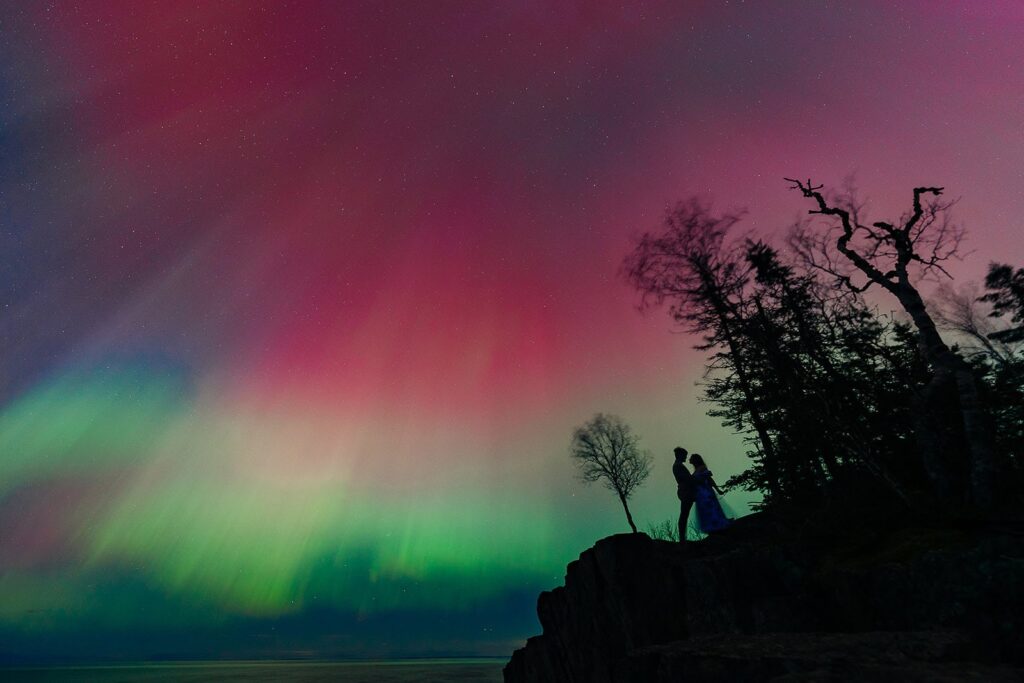
Your Once-in-a-Decade Opportunity is Here
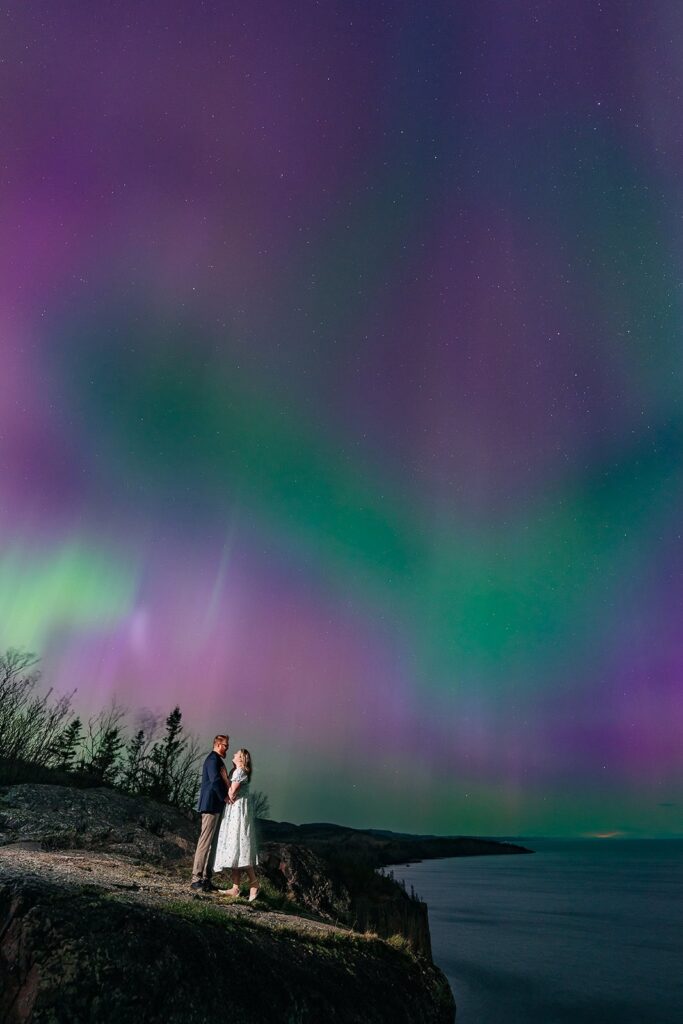
The lights won’t come to you, though. You need the right location, timing, and a bit of adventure in your soul. But trust me, when those ribbons of green and purple appear above you on your wedding night? It’s just incredible. Let’s break down exactly how to make this dream shot happen.
Minnesota’s Dark Sky Sanctuaries Are Your Best Friend
You can’t see the Northern Lights from a brightly lit venue in Minneapolis. You need to head north to where darkness still exists. Voyageurs National Park is a certified International Dark Sky Park, making it perfect for aurora viewing. The Gunflint Trail and Boundary Waters Canoe Area offer near-zero light pollution. Spots like Gunflint Lodge sit at the end of the trail where the skies are pristine.
The North Shore Offers Stunning Reflections
Cook County and the North Shore near Grand Marais or Lutsen are also incredible options. Lake Superior creates a stunning foreground that reflects the lights beautifully. Want to see exactly how dark your location is? Check out this light pollution map to compare options. The darker the better!
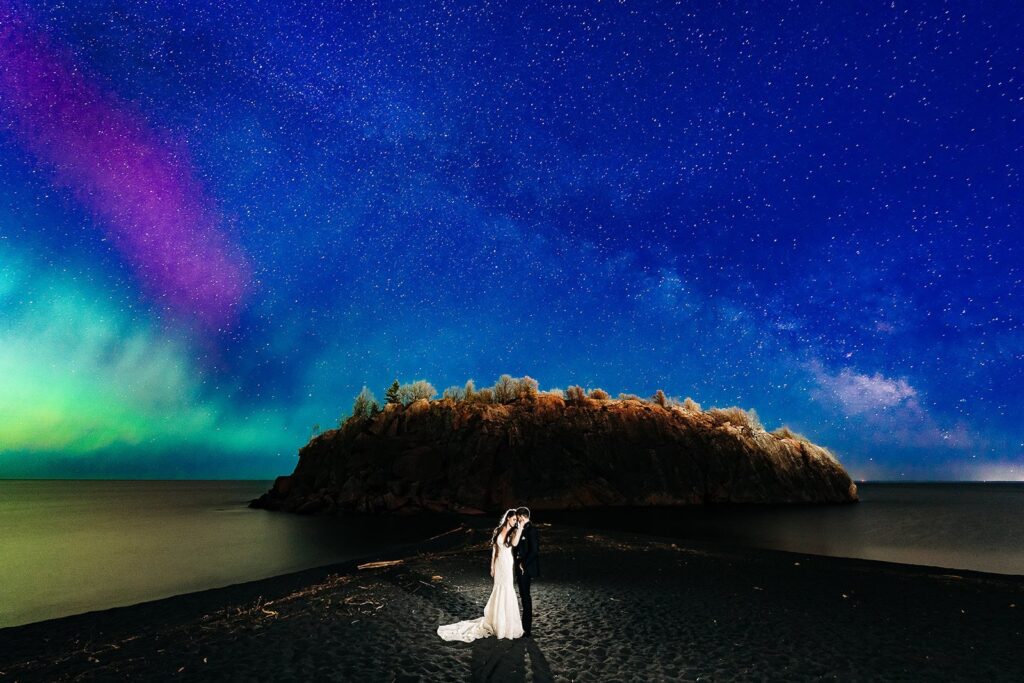
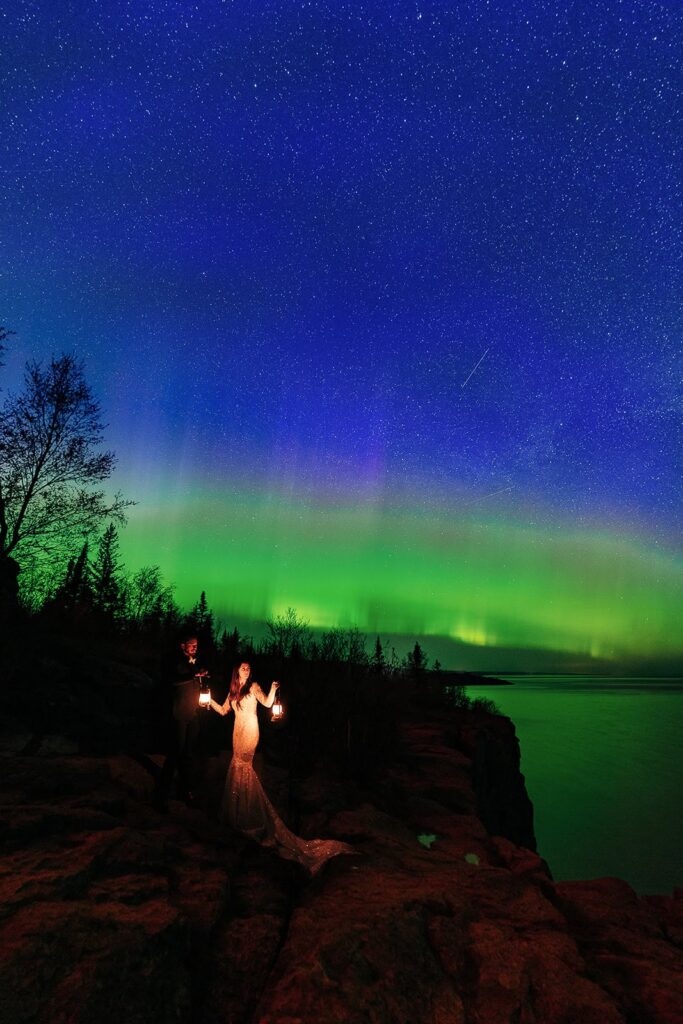
Timing is Everything: Season and Moon Phase Matter
The Northern Lights are technically active all year round. However, you need darkness to actually see them. September through March is your golden window for viewing. Late September and October are the sweet spot: you get the aurora without freezing like you might in January. Plus, the fall colors add another layer of beauty to your photos.
The Moon Phase Can Make or Break Your Aurora Views
Here’s something most couples don’t think about: the moon phase. A full moon is basically a giant light bulb washing out the aurora. You want to plan your date near the New Moon when the sky is darkest. This maximizes your chances of seeing vibrant colors.
Your Wedding Timeline Needs to Be Flexible
Standard wedding timelines won’t work if you want Northern Lights wedding photos. You can’t be strictly bound to a 9 PM dance floor exit. The lights are gloriously unpredictable and wild. You might need to step outside at 11 PM, or even 1 AM.
Build Flexibility Into Your Reception Plans
Consider the “on-call” strategy for your reception. Stay alert and be ready to dash outside when the aurora appears. If you’re planning an elopement specifically for this, book a 2-3 day window. Cloudy on Tuesday? No problem, you’ll shoot on Wednesday instead. This flexibility is crucial for success.


Stay Warm Without Sacrificing Style for Wedding Photos
Let’s get real about standing in snow for 15-second exposures. You need hidden warmth under that gorgeous dress. Fleece-lined leggings are your secret weapon, and Sorel boots will save your toes. Nobody will see your feet in the dark anyway!
Stock Up on Hand Warmers
Buy the HotHands bulk pack and stash warmers everywhere. Put them in your pockets, your boots, even tucked into your dress layers. Your Minnesota wedding photographer will thank you when you’re not shivering through every shot. Staying warm means you can enjoy the moment instead of rushing back inside.
The Technical Guide to Northern Lights Wedding Pictures
A sturdy tripod is absolutely non-negotiable for photographing Northern Lights. It must be heavy enough to withstand the brutal wind off Lake Superior. A lightweight travel tripod will betray you at the worst possible moment.
Your Lens Makes or Breaks the Shot
Your lens choice makes or breaks this shot. You need fast and wide glass, a 14mm or 24mm with f/1.4 or f/2.8 aperture. An f/4 kit lens will struggle badly to gather enough light. You’ll be forced to push your ISO to unacceptably noisy levels. Invest in the right glass or rent it for the weekend.
The Exposure Triangle: Your Starting Point Settings
The goal is capturing stars without trailing from Earth’s rotation. You also need enough light to make the aurora pop. Start with a shutter speed between 5 and 15 seconds. Go longer than 20 seconds, and stars become lines instead of points.
Aperture and ISO Settings for Success
Set your aperture wide open at f/2.8 or wider. This lets in maximum light during your exposure. For ISO, start at 1600 or 3200, depending on aurora brightness. Don’t fear grain; a grainy photo beats a blurry one every single time. You can reduce noise in post-processing later.
Lighting Your Couple Properly for the Northern Lights
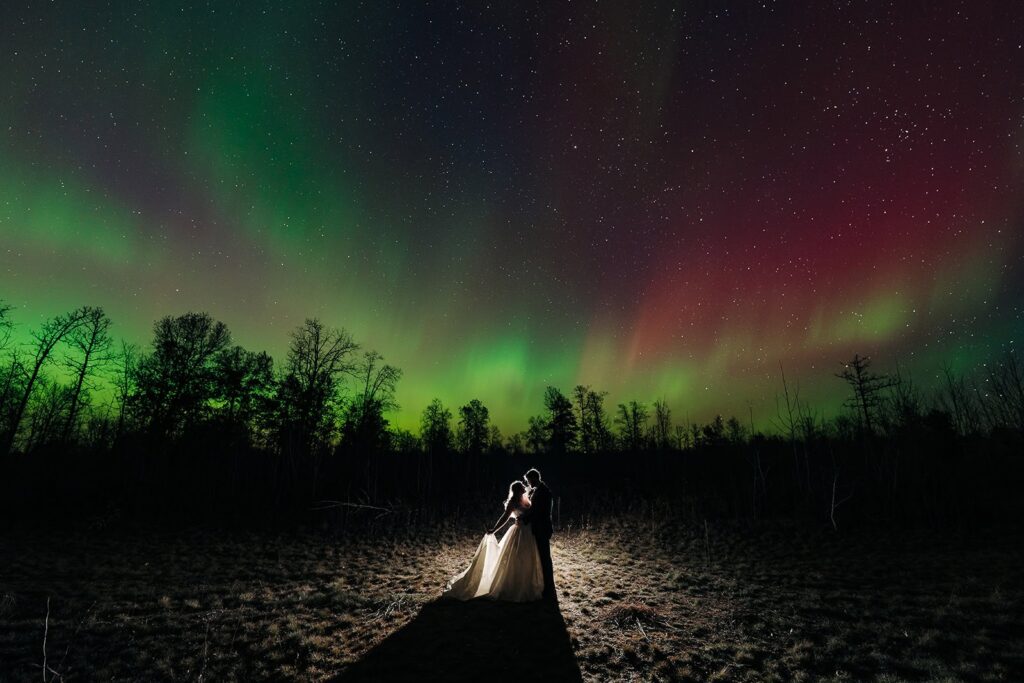
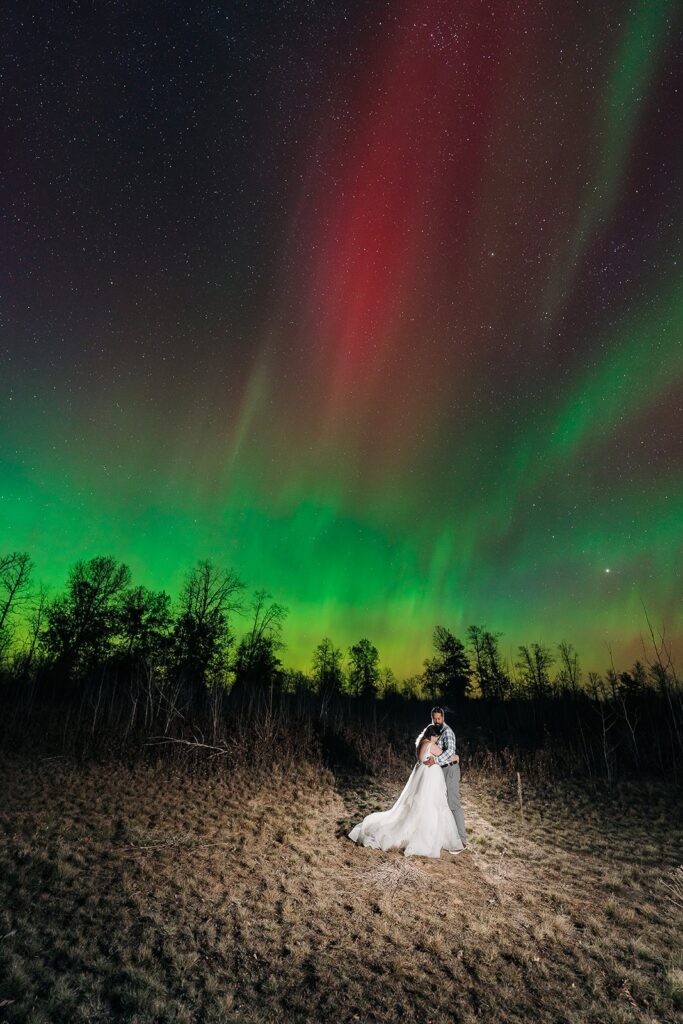
This is where amateur photographers fail completely. Expose for the sky and the couple becomes a silhouette. If you expose for the couple, then the sky goes black. You need to nail both elements simultaneously.
Technique A: The Silhouette Approach
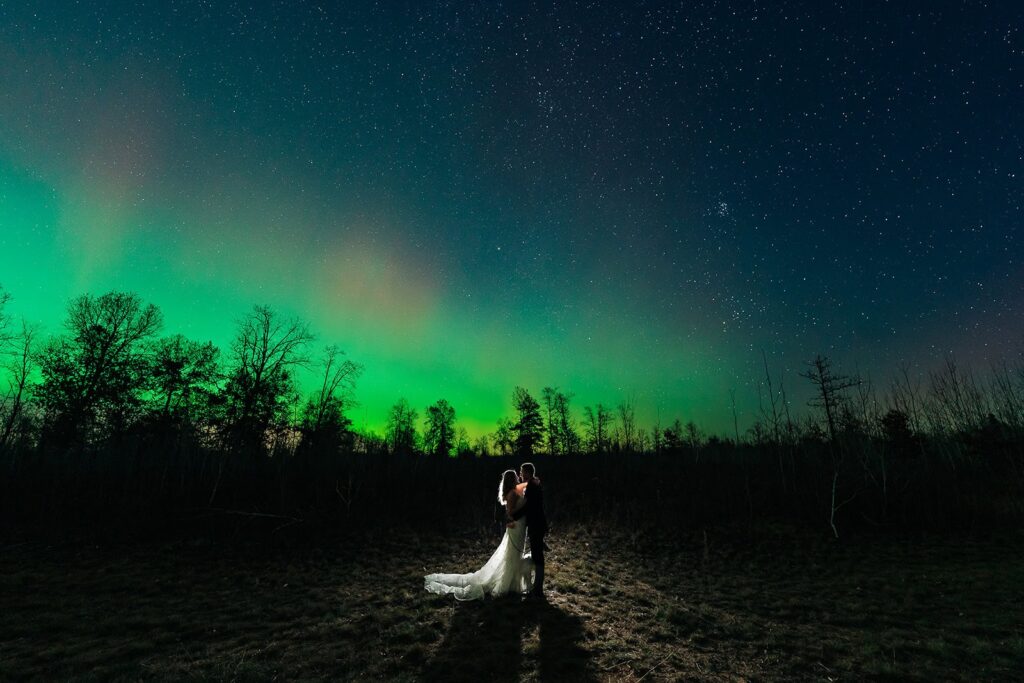
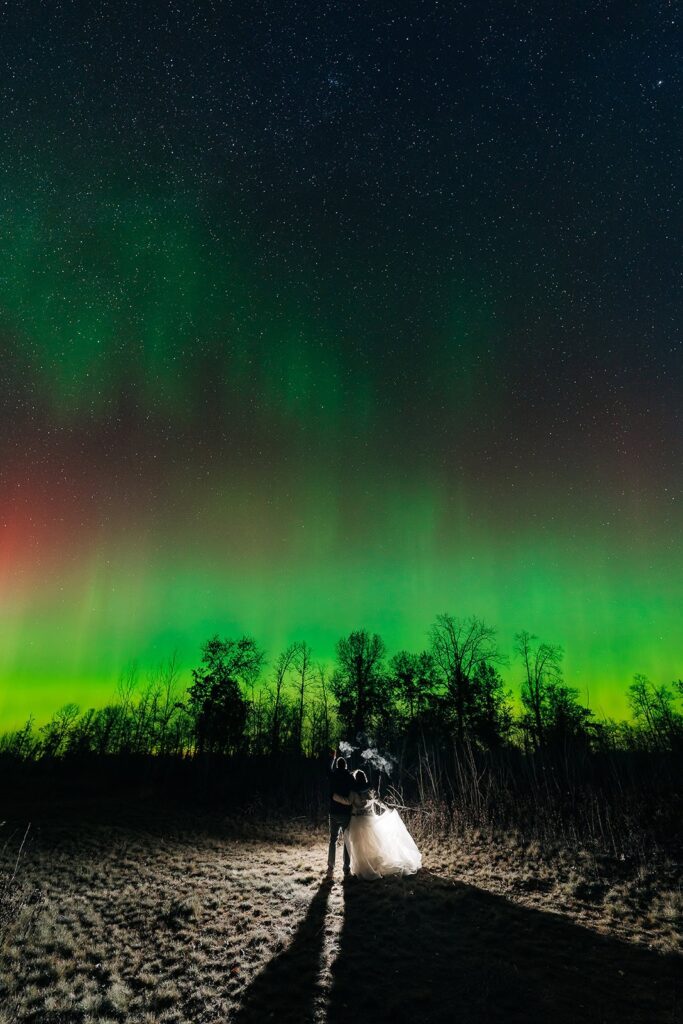
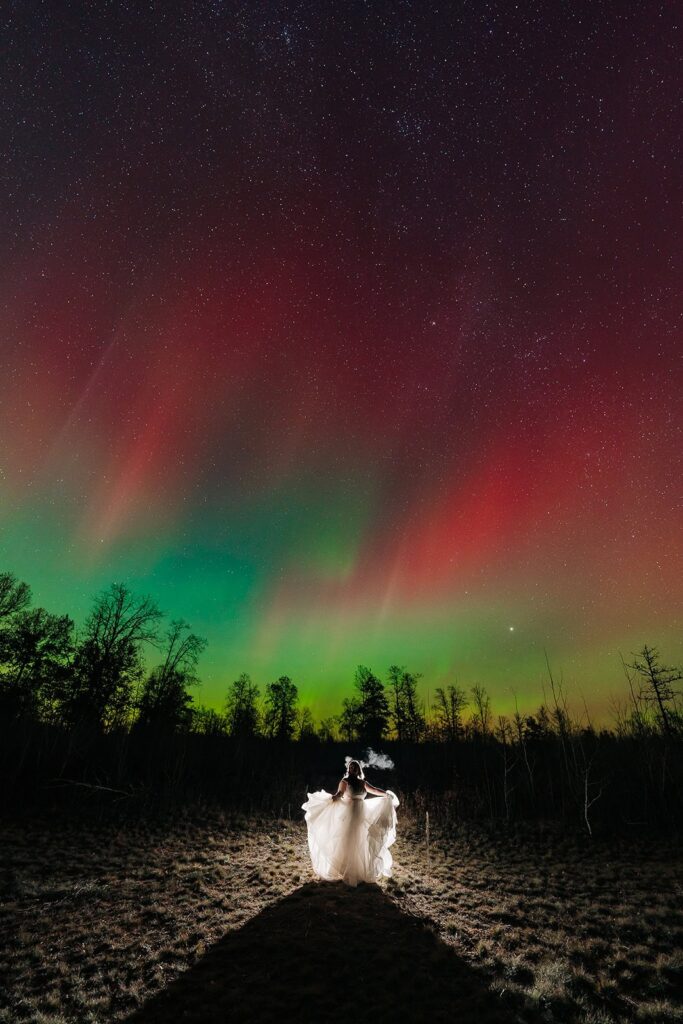
The easiest option is exposing for the sky. Let the couple be dramatic dark shapes against the green aurora glow. This works beautifully for epic, artistic shots. However, you won’t see faces or dress details clearly.
Technique B: The “Pop” Method for Best Quality
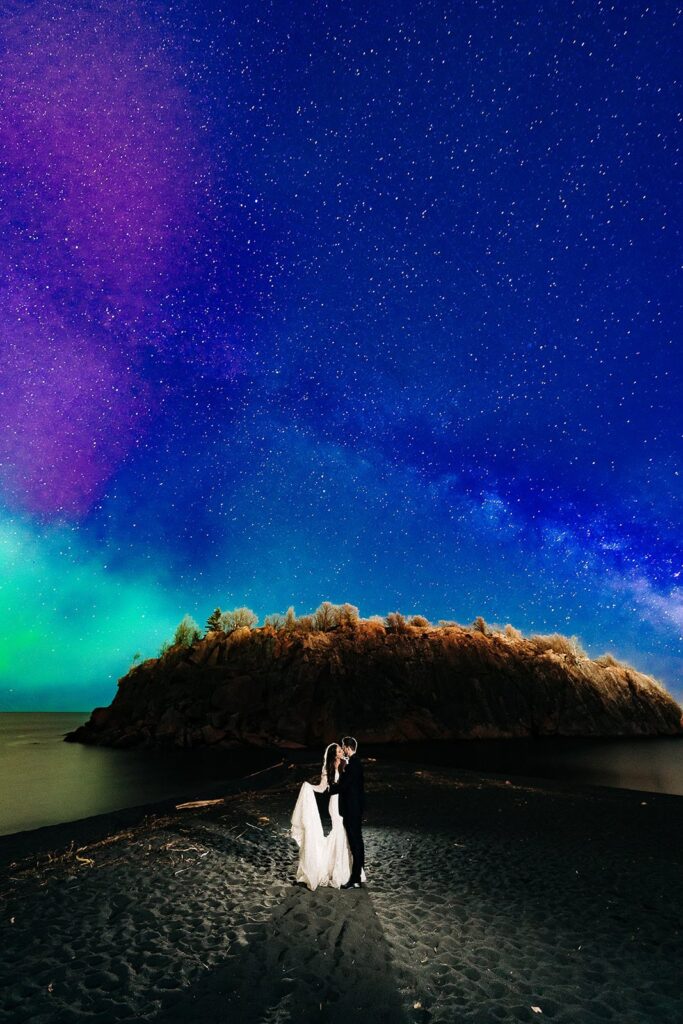
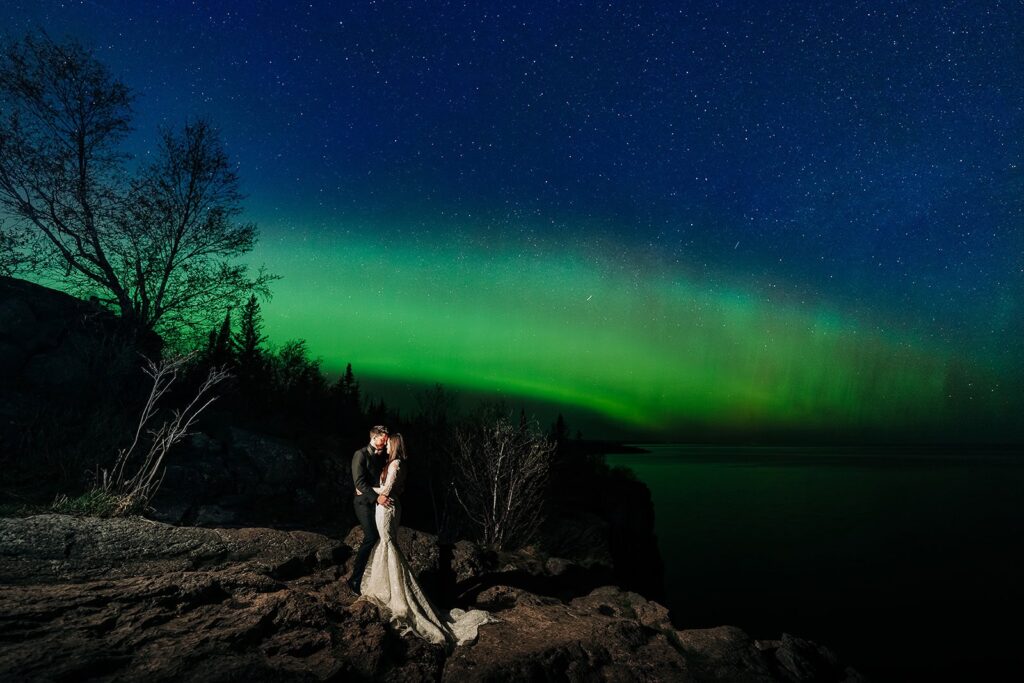
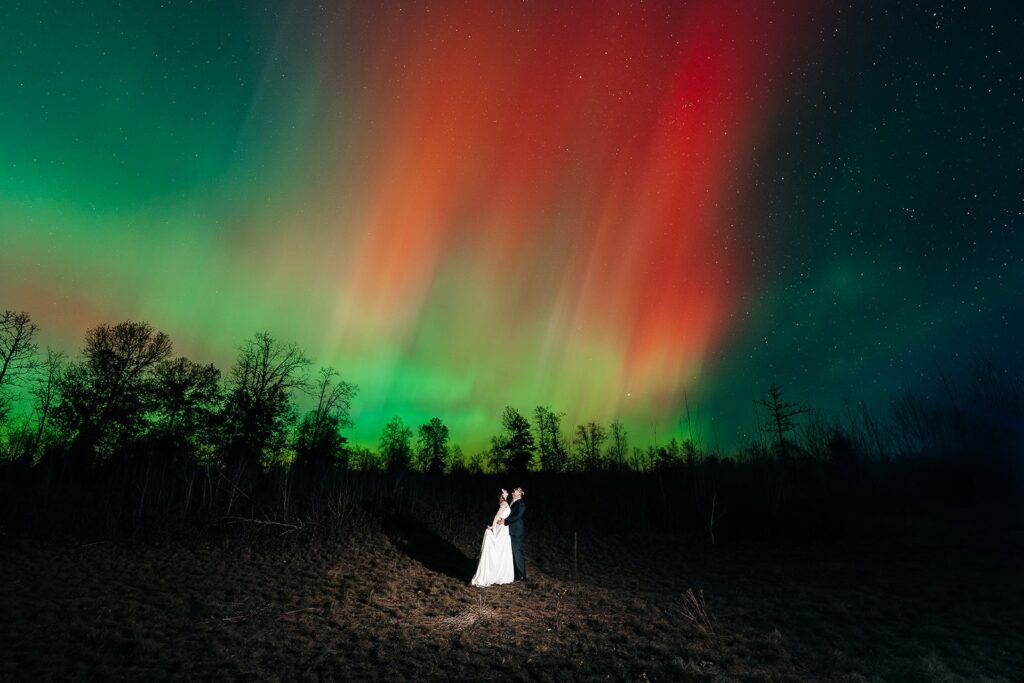
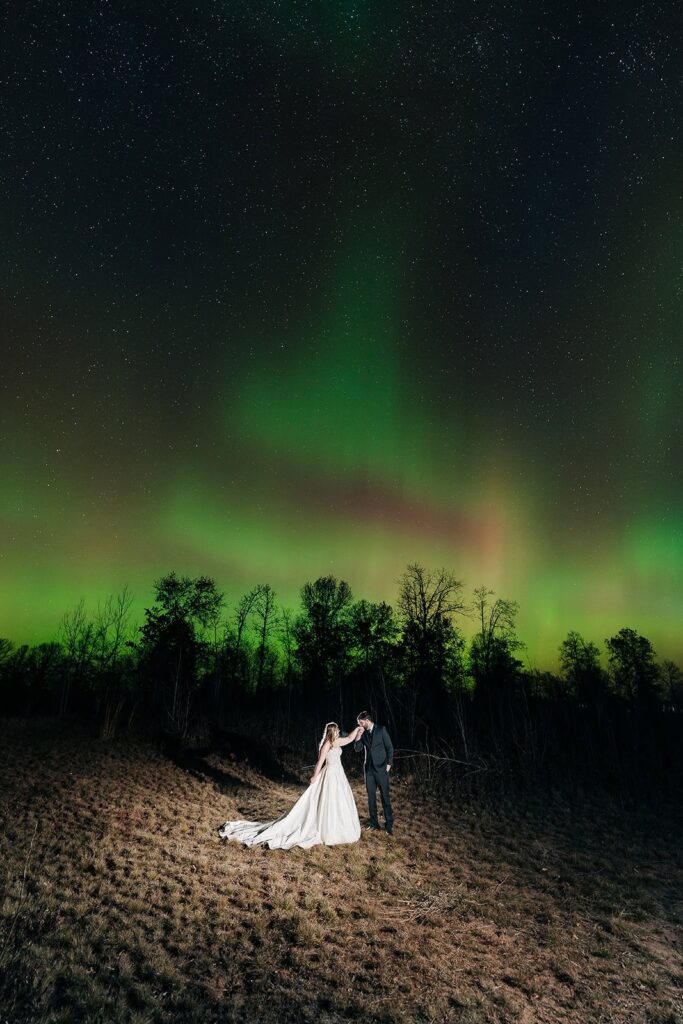
This requires a rear-curtain sync flash for professional results. Set your flash to fire at the end of your exposure. Here’s how the magic happens: your shutter opens, the sensor soaks up Northern Lights for 10 seconds, then flash pops to freeze the couple, and finally the shutter closes.
Why Flash Timing Matters So Much
Why does timing matter so much? If you fire flash at the start, your couple might shift during the 10-second exposure. This fills their bodies with “ghost” stars and motion blur. Firing at the end freezes them sharply on top of the aurora background. This technique requires practice but produces stunning results.

Autofocus Won’t Work in Pitch Black
Autofocus will fail you miserably in pitch blackness. You need a manual focusing workaround that actually works. Have your couple hold a cell phone light to their faces first. Use back-button focus to lock onto their lit faces.
Lock Your Focus Before Shooting Northern Lights
Switch your lens to Manual Focus immediately after locking. This prevents the lens from hunting again when you compose. Have them kill the light and take your shot. This technique ensures sharp focus every single time.
Apps Every Aurora Photographer Needs
Download My Aurora Forecast & Alerts for reliable push notifications. Space Weather Live serves the serious data nerds monitoring KP index numbers. In Minnesota, you generally need KP 4 or 5 to see auroras well with naked eyes.
Use Scientific Resources and Community Groups
Check the NOAA Space Weather Prediction Center for scientific forecasts. The University of Alaska Fairbanks Geophysical Institute offers excellent 27-day outlooks. Join the Great Lakes Aurora Hunters Facebook group for real-time community reports from your region. Local chasers share valuable intel about current activity.
The Truth About Northern Lights Wedding Photos in MN
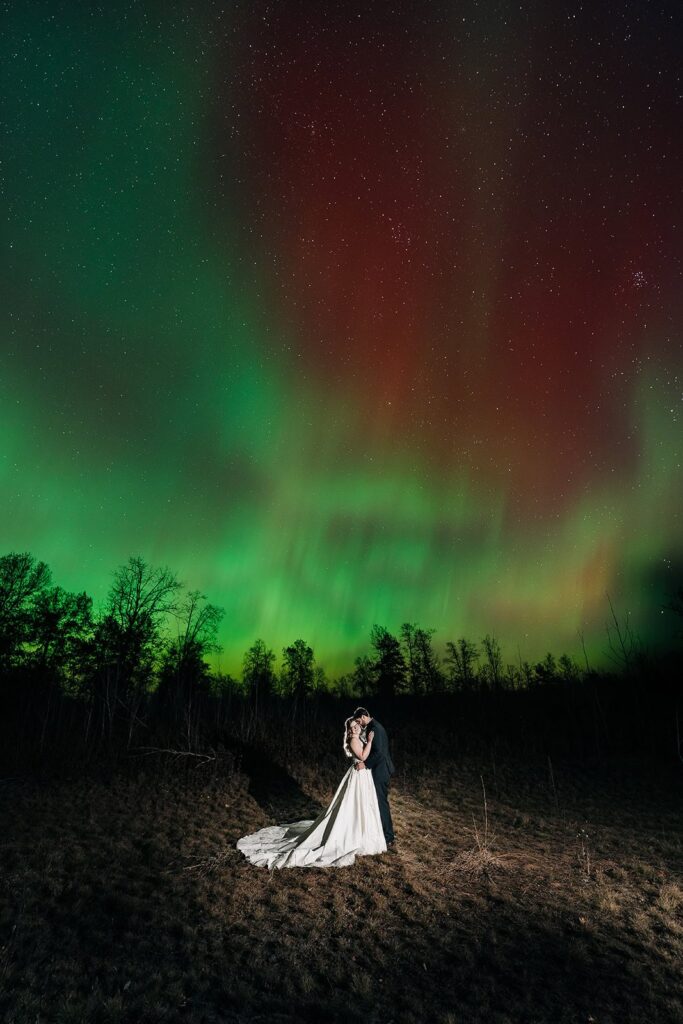
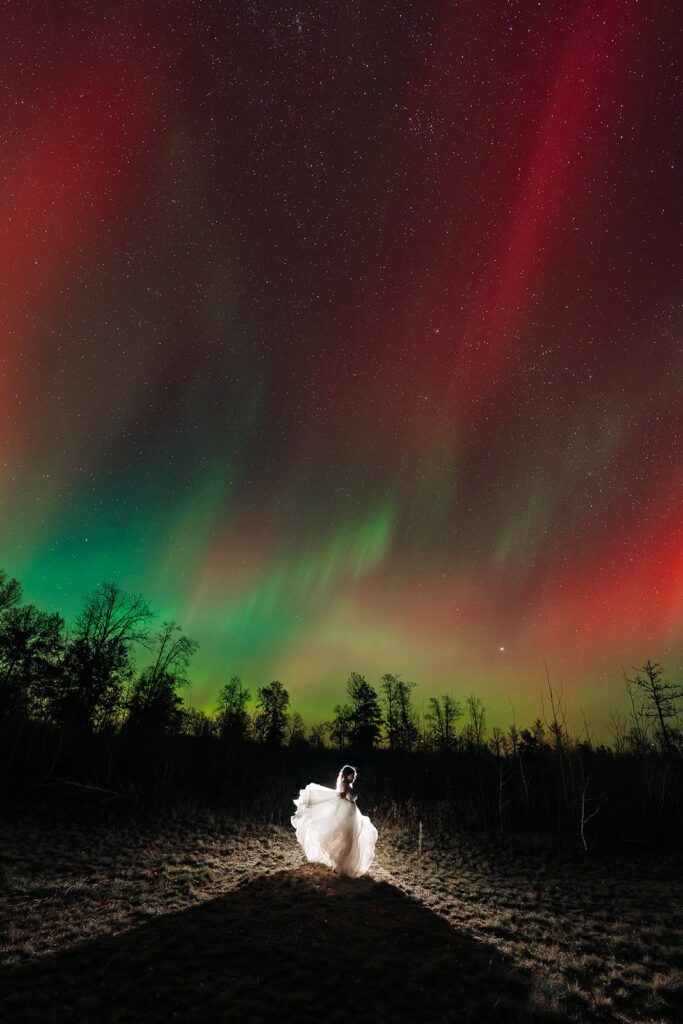
Here’s the honest truth about Northern Lights: they’re wild and untamed. They are never, ever guaranteed, no matter how perfectly you plan. The most important thing is planning a wedding or elopement that’s beautiful without the lights. That way, if the aurora does show up, it’s the greatest gift nature could possibly give you.

Plan a Perfect Day With or Without the Aurora
Don’t stake your entire wedding happiness on one unpredictable phenomenon. Love your venue, adore your photographer, and cherish your partner. Then, if those dancing lights appear? It becomes the cherry on top of an already perfect day. Check out my weddings gallery to see how beautiful Minnesota weddings are with or without the aurora.
Ready to Chase the Northern Lights on Your Minnesota Wedding Day?
Are you ready to plan your adventure north into Minnesota’s dark sky country? Let’s look at moon phases for 2026 and pick your perfect date together. We’ll create a flexible timeline that honors both your celebration and the wild magic of the aurora. Get in touch and let’s start planning your once-in-a-lifetime Northern Lights wedding photos. For more guidance on aurora viewing in the region, check out Visit Cook County’s Northern Lights guide. Your adventure awaits!